Global Stocks Plunge Amid AI Market Sell-Off, Trump Cites Democratic Policies
Global stock markets experienced a sharp downturn on November 6, 2026, driven largely by steep losses in AI-related technology sectors. Former President Donald Trump publicly blamed Democratic regulatory policies for the market crash, while the White House postponed a key meeting with tech executives amid the turmoil. Analysts caution that the market decline results from multiple complex factors beyond political influence alone.
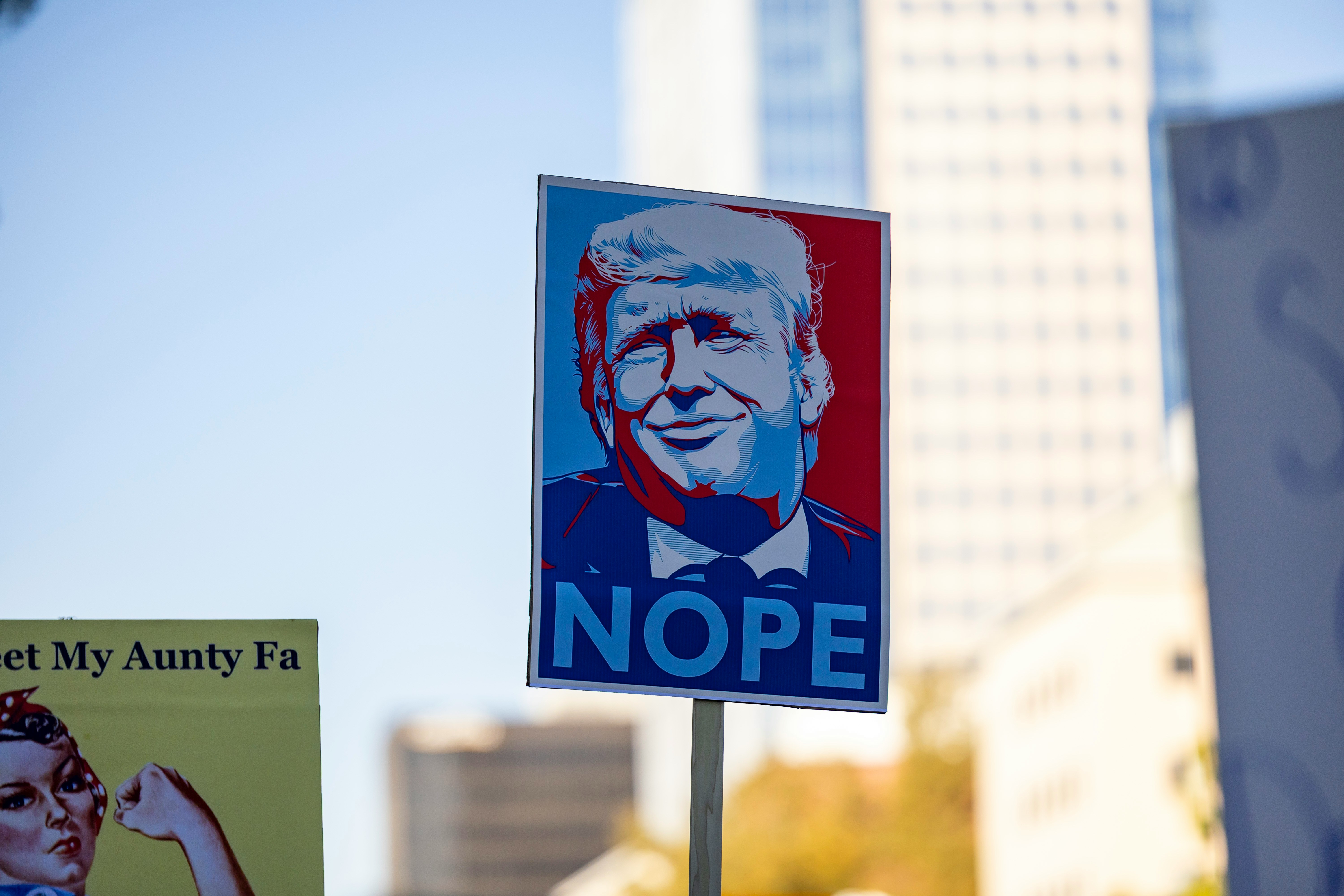
File photo — Protest sign with Donald Trump's face and "nope" · Photo: Leo_Visions (@leo_visions_) / Free Use · Original image source · Licence
On November 6, 2026, global stock markets faced a significant decline, with technology shares—especially those linked to artificial intelligence (AI)—bearing the brunt of the downturn. Sectors involving data centers and semiconductor producers saw particularly heavy losses, prompting widespread sell-offs. Major indices, including the UK’s FTSE 100 which has substantial tech company representation, recorded sharp drops in value over the trading day.
Former President Donald Trump attributed the market collapse primarily to policies enacted by the Democratic Party. He suggested that Democratic approaches to regulating AI technologies have negatively impacted investor confidence and contributed to the sell-off. These remarks quickly drew media attention and became a focal point alongside the unfolding market volatility.
Concurrently, the White House announced a postponement of a scheduled meeting with leading technology executives intended to discuss AI-related challenges and regulatory frameworks. Officials indicated the delay was intended to allow for a more measured response to the market upheaval and evolving economic conditions.
Financial experts and market analysts emphasize that attributing the downturn solely to political causes overlooks the complex interplay of factors influencing global markets. Economic indicators, rapid technological changes in AI development, supply chain dynamics in semiconductor manufacturing, and investor sentiment all play critical roles in such market fluctuations.
The technology sector's sensitivity to shifts in regulation and innovation cycles adds layers of complexity to the situation. The recent sell-off reflects broader concerns about overvaluation in tech stocks and uncertainty surrounding the pace and nature of AI adoption across industries.
Moving forward, stakeholders will closely monitor how governments balance support for AI innovation with regulatory safeguards designed to mitigate risks. The postponed White House meeting is expected to be rescheduled once the market stabilizes, aiming to foster dialogue between policymakers and technology leaders.
Investors and observers await further economic data and official reports to better understand the underlying causes of the market movements. This ongoing scenario underscores the challenges in parsing political rhetoric from market realities amid rapidly evolving technological landscapes.